6 Everyday Hygiene Habits That May Be Spreading Germs Around Your Home:We often think that a clean-looking home is a hygienic home. But germs don’t always stay where we can see them.
They can travel from our hands to towels, phones, kitchen surfaces, toothbrushes, sponges, and utensils without us even realizing it. This invisible movement of germs is known as cross-contamination.
Table of Contents
6 Everyday Hygiene Mistakes That Could Be Spreading Germs Around Your Home
Inspired by Japanese hygiene practices, there are several simple habits that can help reduce the spread of germs around the home.
The goal isn’t to clean everything constantly. It’s to understand how germs move from one place to another—and break that chain.
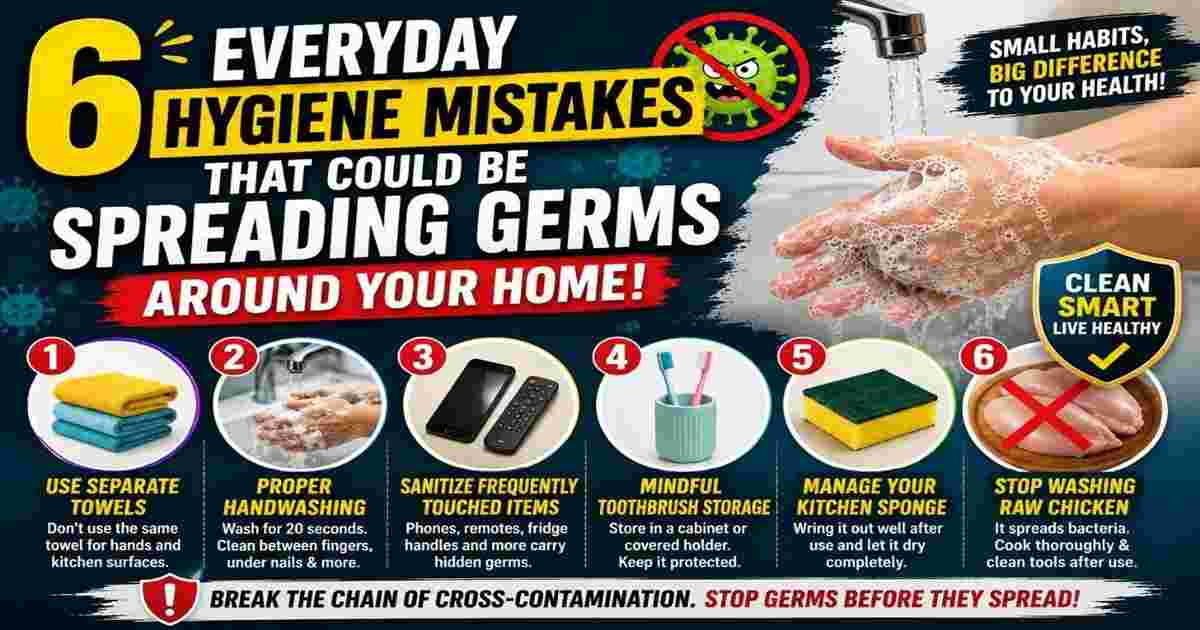
Here are six everyday habits worth changing.
1. Use Separate Towels for Different Tasks
One common mistake is using the same towel for multiple purposes.
For example, you might use a towel to dry your hands and then use that same towel to wipe a kitchen counter or handle a spill.
This can transfer germs from one surface to another.
A better approach is to keep separate towels for separate tasks.
Use one specifically for drying hands and another for cleaning kitchen surfaces. Wash them regularly and replace them when they become damp or dirty.
A small change in how you use towels can help reduce unnecessary cross-contamination.
2. Make Handwashing More Thorough
Washing your hands quickly under running water isn’t necessarily enough.
Proper handwashing requires giving yourself enough time to clean the areas where germs can remain hidden.
Pay particular attention to:
Between your fingers
The backs of your hands
Under and around your fingernails
Your thumbs
Your palms and fingertips
A good rule is to scrub with soap for around 20 seconds, then rinse thoroughly.
This is especially important before preparing food, after using the toilet, after handling raw food, and whenever your hands may have become contaminated.
Handwashing remains one of the simplest and most effective ways to reduce the spread of germs.
3. Don’t Forget High-Touch Objects
We regularly clean tables, floors, and countertops—but what about the objects we touch constantly?
Your smartphone, remote control, refrigerator handle, light switches, door handles, and other frequently touched items can accumulate germs throughout the day.
Think about how many places your phone travels with you. It may be in your hands while you’re cooking, eating, travelling, or using the bathroom.
That’s why high-touch objects deserve occasional cleaning too.
Follow the manufacturer’s cleaning instructions for electronic devices and use appropriate disinfecting methods for other frequently touched surfaces.
The idea isn’t to obsessively disinfect everything.
It’s simply to remember the surfaces we touch most often.
4. Store Your Toothbrush Mindfully
Your toothbrush is designed to go inside your mouth, so keeping it clean and protected matters.
Where you store it can make a difference.
Toothbrushes should be kept in a clean, well-ventilated place where they can dry properly. Avoid storing them in a way that allows them to touch other toothbrushes or contaminated surfaces.
If you prefer a cabinet or covered holder, make sure the toothbrush can still dry adequately rather than remaining trapped in a damp environment.
Good toothbrush storage is about finding a balance between protection and proper drying.
5. Take Care of Your Kitchen Sponge
The humble kitchen sponge can become one of the most overlooked items in the kitchen.
Because sponges frequently remain wet and come into contact with food residue, they can become a place where microorganisms multiply.
Instead of leaving a used sponge wet on the sink, squeeze it out thoroughly after use and keep it somewhere where it can dry quickly.
Also replace kitchen sponges regularly rather than continuing to use them indefinitely.
Keeping your cleaning tools clean and dry is an important part of keeping the kitchen hygienic.
6. Stop Washing Raw Chicken Under the Tap
This is one habit that deserves particular attention.
Many people wash raw chicken before cooking it because they believe it makes the meat cleaner.
However, washing raw chicken under running water can cause bacteria present on the chicken to spread through water droplets and splashes onto nearby countertops, utensils, sinks, and other surfaces.
Instead of washing raw chicken, handle it carefully and cook it thoroughly to a safe internal temperature.
After preparing raw chicken, wash your hands and clean and sanitize surfaces and utensils that came into contact with the raw meat.
The important principle is simple:
Don’t spread contamination in an attempt to remove it.
The Invisible Journey of Germs
The biggest lesson isn’t simply about cleaning more.
It’s about understanding how germs travel.
Consider a typical sequence:
You touch raw food → touch a kitchen towel → pick up your phone → open the refrigerator → touch a door handle.
Without realizing it, you may have transferred contamination across several different objects.
This is why hygiene isn’t only about wiping surfaces after they become dirty.
It’s about interrupting the chain before germs have the opportunity to travel throughout your home.
Clean Smarter, Not Just More
A hygienic home doesn’t require constant cleaning.
Instead, focus on the places and habits that have the greatest potential for cross-contamination.
Use separate towels.
Wash your hands properly.
Clean high-touch objects.
Store your toothbrush appropriately.
Keep kitchen sponges dry.
And don’t wash raw chicken under the tap.
These may seem like small changes, but together they can create a more thoughtful approach to household hygiene.
Final Thoughts
True cleanliness isn’t just about having spotless floors or shiny countertops.
It’s about making conscious decisions about how we interact with the things around us.
Every day, we move between different rooms, surfaces, objects, and activities. Germs can make the same journey if we’re not careful.
The goal is to stop that invisible journey before it begins.
Clean thoughtfully.
Break the chain of cross-contamination.
And make good hygiene a daily habit—not just an occasional cleaning task.
- 6 Everyday Hygiene Mistakes That Could Be Spreading Germs Around Your Home

- From a ₹15,000 Salary to Financial Independence: Arjun’s Inspiring Side-Business Journey
- 7 Japanese Lifestyle Habits That Can Support Healthy Weight Management
- 10 Thoughtful Rakhi Gift Ideas for Your Sister-in-Law | Rakhi Gift Ideas for Sister in Law
- Rakhi Messages|Rakshabandhan Quotes|Rakshabandhan 2026|Rakhi Wishes
- 5 Useful Raksha Bandhan Gift Ideas That Your Brother or Sister Will Actually Use